Pages

Showing posts with label unit planning. Show all posts

Wednesday, September 2, 2015

Unit planning with OneNote

In computer programming the programmer conforms their workflow to the particular software they code in (vim, virtual studio, emacs, etc) and the workflow their company or version control system uses (git, mercurial, subversion, etc).  There are no such workflow standards when designing instructional units. Software to plan units and lessons exist, but they often feel alien to most other teachers. It is like an IDE with no vim shortcut plugins if the programmer is use to vim. After playing with Microsoft OneNote last school year I feel it is versatile enough that I can plan Astronomy and my Integrated Science classes in a way that feels comfortable to me.

Continuous calendar in Excel
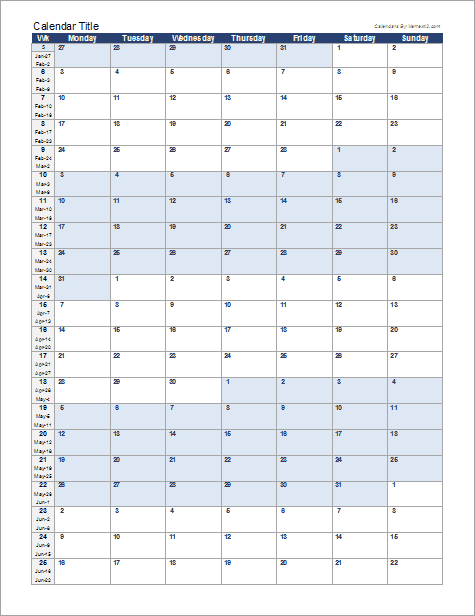
I like having a visual layout of my lessons on a calendar. The problem is almost every calendar add-on or template uses the standard monthly calendar. My units do not align to calendar months. I found a continuous calendar Excel/Google Sheets template that solves this. I set the spreadsheet to start in September and I hide the weekend rows.

OneNote can embed* at least Word and Excel sheets. Importing Power Point slides will import them as individual pages. I have not tried other elements from the Office suite. OneNote has some limited Word and Excel functionality for embedded docs. One minor thing missing is merged cells -- every cell is outlined in OneNote.

The lack of cell merging does allow me to organize my lessons. In the cell with the date I put in any special changes to the bell schedule. In the cell under the date I put in a summery of the lesson. If I was smart I would write content and language objectives for this. Under that I attach** the worksheets, power points, web links, and any other document that will be used for the lesson. I manually color code my units by setting the background colors of the cells and use grey for in-service or holidays. I also really like being able to slip in notes on the margin to remind me of changes I want to do.
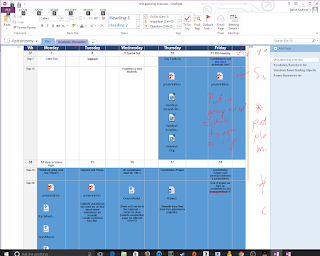
Continuous calendar in OneNote
There are limitations to this process. I also forgot to add days for quizzes and tests. I want to insert lessons and expand some lessons into two days. I have no way to insert this without having to manually move every cell in the spreadsheet. Every resource I have found so far focuses on lesson planning, not unit planning. If anyone happens to know of one LET ME KNOW. There is a developer API that I am going to poke around in and hope it is trivial to add a continuous calendar.

* One way to do this is by clicking a dragging the file icon and select "insert..." from the menu that pops up. You can also copy from Word or Excel and paste it into OneNote.

** Same as above but select "attach..." from the menu. [EDIT]WARNING: this creates a copy of the document that is embedded in the OneNote file itself. If you edit the original file it will not show up in OneNote, and vice versa.[/EDIT]
Monday, August 31, 2015

Unit Planning Astronomy

Astronomy @ RHS: Semester long, standards/proficiency based class on the space science targeting non-university bound population of 11th and 12 graders.

My only formal education in Astronomy was a two semester college course. It was dual listed as both a 100 level physics class and a 300 level general science class (science class for non majors). This lead to a stark bi-modal distribution of students -- those who could integrate equations in their sleep and were use to the content-memorization paradigm of university science education, and those who did not. The class was taught by a physics professor who had a hard time with this*. Later on I was a TA for the class, the first semester was taught by a different physics professor who talked down to those who couldn't compute Kepler orbital parameters. The second semester was taught by a graduate student who was use to and enjoyed general education students.

*Interesting enough he differentiated by using separate curves for the exams based on if a student was taking it as physics or general ed.

When my Astronomy course proposal was accepted for the course cataloged at the high school I teach at (I was shocked), and especially when 150 students forecasted for it (even more shocked!), I began to research curriculum and lesson ideas. Almost all that I found taught the same curriculum that I had at university. Here is the general flow:
  • The introduction is historical views on the night sky (heliocentric vs geocentric).
  • A unit on the celestial sphere and the constellations.
  • A unit on the planets, from Mercury on out. Students memorize facts about the planets and regurgitate them for a scantron quiz.
  • A unit on stars and how to read the HR diagram.
  • A unit on stellar evoltuion.
  • A unit on galaxies.
  • A unit on cosmology.
I only have a semester and my target population doesn't jive with rote memorization. Processes and hands on activities will be where I need to put my focus. Processing time is also needed to. I'm not a fan of word searches or (most) crossword puzzles, but those kinds of activities give students time to assimilate and accommodate information they recently learned. There will be a few small artsy projects for this.  I want to keep it contemporary. I want to focus on the humanity of space exploration: the stories of the missions be it robotic or manned. What is it like to live on the ISS as what engineering is needed to make it possible. What would traveling to the Moon or Mars be like and the challenges we face to get there.

Unit planning thus far
Here is my plan:
  • Introduction is on the nuts and bolts of the celestial sphere and work on the constellations. In the first class students will be discovering the power of stars influencing their lives -- none at all! This is in blue and I'm struggling to extend it longer than a week. Map reading will be the skill I want to work on in this unit.
  • Instead of fact-memorization of planets the second unit (green) will be on processes: volcanoes, impacting, plate tectonics, atmospheres, the sun and sunspot cycles and space weather, and magnetospheres. Students will learn about the planets and moons based on the processes they are associated with, not the heliocentric order.  With the length right now if feels a bit ADD, but with the sheltered instruction training I'll be able to expand this out a little more and avoid the lecture-lab format. Upperclasspersons need processing time too.
  • Unit three will have students using the microobservatory network to collect information on an exosolar planet using the Other Worlds curriculum and the updated ExoLab tools. I'm going to fold in a field trip to the planetarium at a nearby community college.
  • Here I have a two month cap of time that will hopefully shrink to one as I fill in the planetary process and constellation unit.
  • My 5th grade teacher had us play Discovery as part of our unit of colonial America. It is a simulation/game that the class plays in teams of 6 over the period of 2-3 weeks. There is reading and other literacy components as well. I loved it. I'm going to mod this paper and pen game to be about research teams or colonizing mars in the near future. I'm going to replace a number of readings with excerpts from Andy Weir's The Martian as well as some more technical readings from NASA, JPL, and ESA. This is on top of the game play modifications as well.